
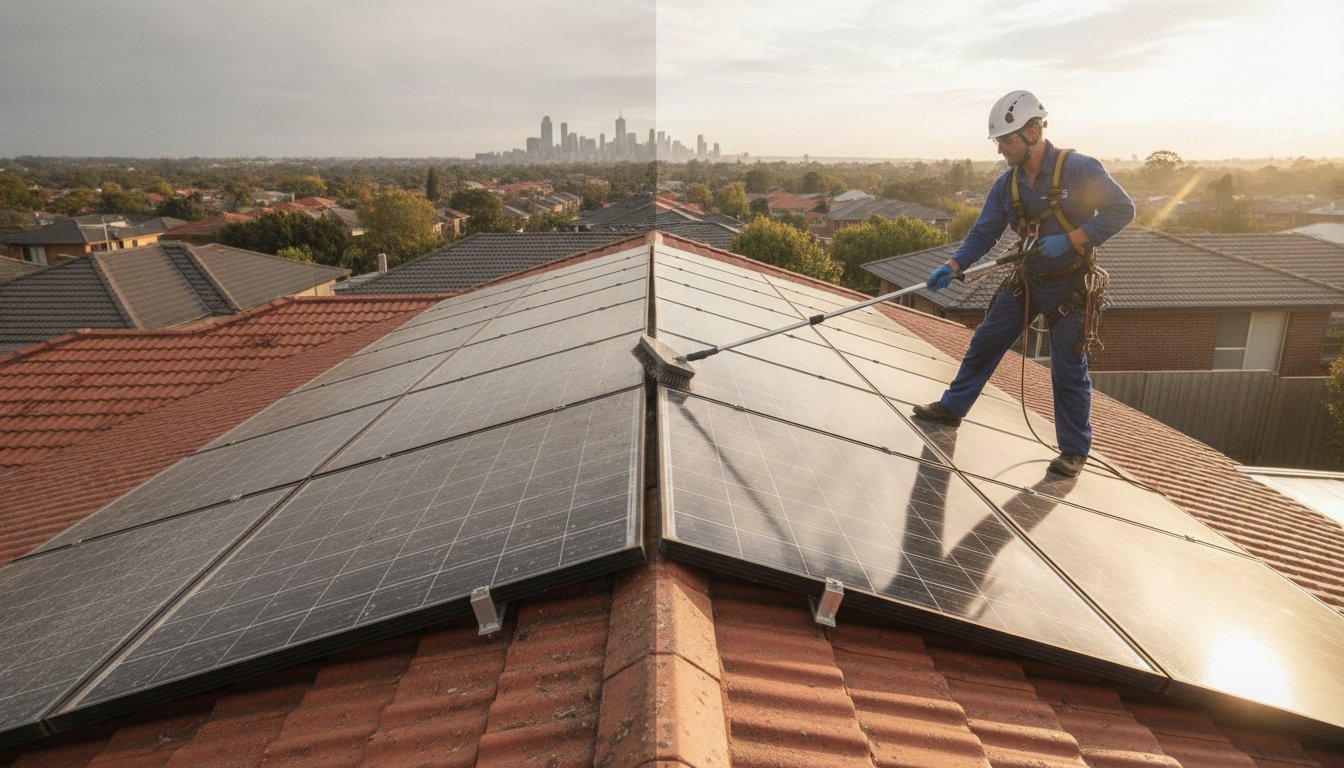
Thinking that Melbourne’s unpredictable rain acts as a free cleaning service for your rooftop investment is a mistake that could cost you hundreds in lost efficiency. While it’s tempting to let nature take the lead, rain often leaves behind a film of dust and grit that blocks sunlight. Many local homeowners feel the frustration of rising energy bills despite having a premium solar setup, such as those installed by GridFree Solar. You’ve likely invested a significant amount to reduce your power costs, so it’s only natural to feel some anxiety about the risks of DIY maintenance or accidentally voiding your warranty. Adhering to professional solar panel cleaning safety requirements is the only way to ensure your system performs as promised.
Bird droppings are more than just a nuisance; they are a chemical and thermal hazard that can cause permanent cell damage. This article explains the essential safety standards for solar maintenance and why nature alone cannot fix stubborn biological soiling. You’ll learn how to maintain compliance with Australian Standard AS/NZS 5033:2021 while protecting your panels from “hot spots.” We’ll show you how to achieve peak energy output and secure your investment without ever having to step foot on a dangerous ladder.
Key Takeaways
- Rain alone cannot remove stubborn biological soiling or fine dust, which can significantly reduce your system’s energy output over time.
- Learn how bird droppings create “hot spots” that force solar cells to consume heat instead of producing electricity, leading to potential hardware damage.
- Familiarise yourself with solar panel cleaning safety requirements, including the necessity of height-safety certification for any work performed above two metres.
- Discover why standard tap water and abrasive chemicals can cause limescale buildup and permanently damage your panels’ anti-reflective coatings.
- Professional maintenance protects your investment by ensuring compliance with Australian safety standards and keeping your manufacturer’s warranty intact.
The “Self-Cleaning” Myth: Why Melbourne Rain Fails Your Solar Array
Many Melbourne homeowners believe that a 10-degree tilt and the occasional downpour are all it takes to keep a Photovoltaic system running at peak performance. This “self-cleaning” concept is a persistent myth. While rain can wash away loose dust, it’s often powerless against the unique environmental challenges of the Victorian climate. Adhering to professional solar panel cleaning safety requirements is necessary because maintaining these assets requires more than just a garden hose or a lucky storm. The reality is that nature often makes the problem worse before it makes it better.
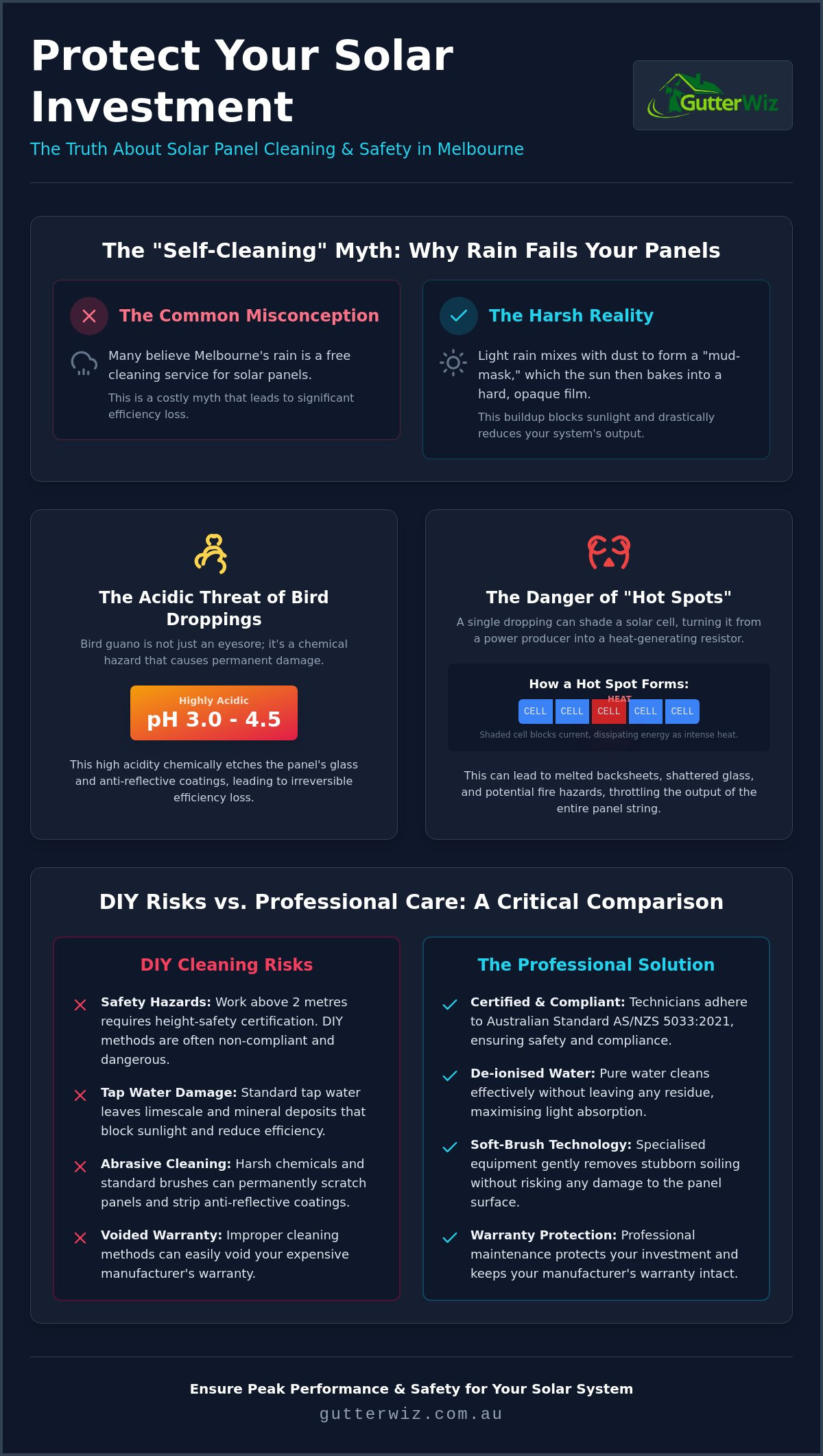
Melbourne weather is famous for delivering four seasons in one day. We often see light, misty drizzles rather than heavy, scrubbing rain. This minimal moisture mixes with the fine dust and pollen sitting on your panels, creating a “mud-mask.” Instead of washing off, the debris spreads out and dries into a stubborn, opaque film. Once this slurry is applied, the harsh Australian sun acts as an oven. It bakes the biological waste and dust into a hardened barrier that resists future rainfall. This “concrete effect” leads to a permanent drop in efficiency that simple gravity cannot solve. Understanding how often to clean solar panels Melbourne property owners should schedule maintenance is essential to preventing this cumulative buildup from eroding your system’s performance.
Why Light Rain is Actually Your Enemy
Minimal rainfall is often more damaging than no rain at all. It provides just enough moisture to turn loose particles into a sticky slurry that clings to existing bird droppings. This buildup often migrates to the bottom edge of the panel frame, creating what specialists call the “rim effect.” This accumulation causes edge-shading, where even a small strip of debris can disproportionately drop the output of the entire string. Simply put, 5mm of rain is insufficient to dislodge sun-baked bird guano that has chemically bonded with the glass surface.
The Corrosive Impact of Bird Guano
Bird waste is highly acidic, typically sitting at a pH level between 3.0 and 4.5. This uric acid doesn’t just sit on the surface; it chemically etches into the tempered glass and its delicate anti-reflective coatings. If left for months, this leads to permanent light transmission loss. There’s a massive difference between “surface dirt,” which reflects light, and “biological shading,” which actively damages the hardware. Understanding solar panel cleaning safety requirements ensures that these biological threats are handled without risking the structural integrity of the roof or the panels themselves. Waiting for winter rain to solve the problem often results in hardware degradation that no amount of cleaning can eventually reverse.
The Science of “Hot Spots”: How Bird Droppings Damage Hardware
While many property owners focus on the loss of power generation, the physical damage to the hardware is a much more serious concern. When a single solar cell is shaded by a bird dropping, it stops producing electricity while the surrounding cells in the string remain fully active. This creates what technicians call a “hot spot.” The active cells continue to push current through the circuit, but the shaded cell acts as a point of high electrical resistance. It effectively becomes a bottleneck for the entire system.
Instead of contributing to your home’s power supply, that shaded cell begins to consume energy. This energy is dissipated as intense, localised heat. This isn’t just a minor temperature increase. In extreme cases, these hot spots can reach temperatures high enough to melt the protective backsheet or cause the tempered glass to shatter. Following strict solar panel cleaning safety requirements ensures that these thermal hazards are identified and managed before they become a genuine fire risk to your home.
This creates a domino effect across your entire array. Most residential systems are wired in series, meaning the performance of the entire string is often dictated by its weakest, dirtiest link. One heavily soiled panel can effectively throttle the output of every other panel on that circuit. A professional solar panel cleaning service is the most effective way to identify and prevent these thermal issues before they lead to total hardware failure.
Bypass Diodes: The Overworked Safety Net
Modern panels include bypass diodes designed to mitigate the impact of shading. These components act as an electrical detour, allowing current to flow around a shaded group of cells. However, diodes are intended for temporary shading, such as a passing cloud or a falling leaf. When a bird dropping is baked onto the glass, the diode remains constantly active. This leads to premature diode burnout, leaving the panel unprotected and often resulting in warranty claims being rejected due to a lack of proper maintenance.
Thermal Stress and Micro-Cracks
The intense heat generated by a hot spot causes uneven thermal expansion across the panel. The silicon wafer, the glass, and the metal frame all expand at different rates under localised heat stress. This physical tension leads to micro-cracks that are invisible to the naked eye but devastating to efficiency. Over time, these cracks sever the internal electrical connections, permanently killing the cell’s ability to produce power. A professional clean is an investment in the 25-year lifespan of the array. Adhering to solar panel cleaning safety requirements protects both the specialist on the roof and the long-term health of your asset.
Solar Panel Cleaning Safety Requirements: DIY vs. Professional Standards
Protecting your hardware from thermal damage is vital, but protecting human life is the absolute priority. Many homeowners view solar maintenance as a simple weekend chore, similar to washing a car. However, the solar panel cleaning safety requirements in Victoria are stringent for a reason. Working on a roof involves managing high-voltage electrical systems while balanced on steep, often fragile surfaces. Transitioning from a ladder to a roof requires specific skills that go beyond basic home maintenance. Before deciding to tackle this yourself, it is worth reviewing a detailed breakdown of DIY vs professional solar panel cleaning to fully understand the risks and responsibilities involved.
In Australia, any task performed at a height of 2 metres or more is classified as high-risk work. Professional technicians must hold nationally recognised height-safety certifications. This training covers the correct use of anchor points, industrial-grade harnesses, and static lines. Without this equipment, a simple slip on a wet tile can result in a life-altering injury. Beyond the physical fall risk, the legal liability for an accident on your property often rests with you. Hiring uncertified “backyarders” who lack proper insurance and safety rigging puts your financial security at risk.
Electrical hazards present a different type of danger. Solar arrays are DC systems that remain energised as long as the sun is shining. Introducing water to a system with perished cable insulation or a cracked DC isolator housing can lead to arc flashes or electrocution. Professional cleaners are trained to perform a visual audit of the system’s integrity before a single drop of water touches the glass. This meticulous approach ensures that the solar panel cleaning safety requirements are met, protecting both the operator and your home’s electrical infrastructure.
The “Feet on the Ground” Rule
Solar Victoria explicitly recommends that homeowners keep their feet on the ground for any DIY cleaning attempts. While telescopic poles are available, they have significant limitations when it comes to removing sun-baked bird guano from a distance. Scrubbing with enough force to remove biological waste from a five-metre distance is physically exhausting and often ineffective. Gutter Wiz technicians use specialised safety harnesses and roof-crawling techniques even for “simple” cleans to ensure every panel is reached safely and thoroughly.
Electrical Isolation Protocols
Professional cleaning follows the AS/NZS 5033:2021 standards, which outline the safety requirements for photovoltaic arrays. This includes checking for “ground faults” or leakage that a DIYer would likely miss. If water enters a compromised junction box, it can cause a short circuit that disables the entire string. Our team verifies the condition of the glass and the seals before beginning, ensuring that your system remains safe and your manufacturer’s warranty stays fully intact.
The Professional Edge: De-ionised Water and Soft-Brush Tech
Professionalism in solar maintenance extends beyond harnesses and ladders. It also involves the specific technology used to interact with the panels themselves. Meeting solar panel cleaning safety requirements means using tools that protect the structural integrity of the glass while ensuring the technician remains safe. Using a standard garden hose and a kitchen sponge might seem harmless, but it’s one of the fastest ways to permanently degrade your system’s performance. The equipment used by specialists is designed to treat the panel as a sensitive electronic component, not just a piece of glass.
Melbourne’s tap water is generally high quality for drinking, but it contains dissolved minerals like calcium and magnesium. When you spray this water onto a hot solar panel, the liquid evaporates almost instantly, leaving behind white mineral deposits. This process, known as “scaling,” creates a physical barrier that blocks sunlight. Over time, these spots become incredibly difficult to remove without using abrasive techniques that risk scratching the glass. This is why professional systems rely on de-ionised water to achieve a streak-free finish that allows for maximum light penetration.
Most modern panels feature a sophisticated Anti-Reflective Coating (ARC). This layer is designed to trap as much light as possible, but it’s incredibly thin and easily damaged. Using common household detergents or dish soap is a mistake. These chemicals strip away the ARC and leave a sticky residue that attracts pollen and dust. To avoid these issues and protect your investment, you should book a professional solar panel clean that utilises purified water technology and specialised equipment.
Why Limescale is a Permanent Efficiency Killer
Scaling is a cumulative problem. In the intense heat of the Victorian sun, these minerals bake into the glass, bonding with the surface. Once this bond is formed, simple rain won’t wash it away. Gutter Wiz uses a multi-stage de-ionisation filtration system to remove every mineral from the water before it reaches your roof. This “hungry water” naturally attracts dirt and bird guano, lifting it away without the need for aggressive scrubbing or high-pressure water that could damage the panel seals.
The “No-Chemical” Requirement
Safety also means environmental responsibility. Using detergents on a roof leads to chemical runoff that can contaminate your garden beds or rainwater tanks. Specialised solar brushes are superior to standard household brooms because they use ultra-soft, feathered bristles designed specifically for solar glass. These brushes dislodge hardened biological waste without creating micro-scratches, ensuring your system meets all solar panel cleaning safety requirements while maintaining its 25-year design life. This chemical-free approach is safer for your hardware, your home, and the local environment.
Why Gutter Wiz is Melbourne’s Trusted Solar Maintenance Partner
Gutter Wiz has spent over 10 years building a reputation as a disciplined specialist in property maintenance. We serve residential and commercial clients across Melbourne and the Mornington Peninsula with a focus on transparency and practical expertise. Our team understands that your solar array is a high-value asset. We treat it with the precision it deserves. By strictly following all solar panel cleaning safety requirements, we eliminate the risks associated with amateur maintenance and ensure your investment remains protected.
Every technician we send to your property is height-safety certified and carries comprehensive insurance. This provides a “safe pair of hands” for your home, ensuring that work is performed without compromising your roof’s integrity or your financial security. We provide visual verification for every job we complete. You will receive before-and-after photographic evidence, allowing you to see the results of our meticulous cleaning process without having to climb a ladder yourself. This accountability is a core part of our service, providing peace of mind through documented results.
Our “Mess-Free” guarantee ensures that we leave your property exactly as we found it. We don’t just clean the panels and walk away. Our systematic approach includes a thorough rinse of the surrounding roof area to ensure no debris or biological waste is left behind. We manage the entire process with a methodical flow, identifying the specific needs of your property and executing a professional solution that adheres to the highest solar panel cleaning safety requirements in the industry.
Comprehensive Roof Health Checks
While we are on your roof, we perform a complimentary assessment of the surrounding infrastructure. There is a direct connection between your gutters and your solar performance. Blocked gutters can lead to moisture buildup and attract pests that may damage solar wiring. We identify potential issues like cracked tiles or early biological regrowth before they become expensive repairs. For long-term protection, we can integrate BioShield treatments to prevent future moss and algae from taking hold on your roof surface and affecting your panels.
Maximising Your Solar ROI
Request your free, no-obligation solar cleaning quote from Gutter Wiz today.
Secure Your Solar Investment for the Long Term
Relying on Melbourne’s rain to maintain your solar array is a gamble that often leads to hardware degradation and lost energy savings. As we have discussed, bird droppings and baked-on dust create thermal hot spots that can permanently damage your cells. Adhering to professional solar panel cleaning safety requirements is the only way to ensure your system survives its 25-year design life while keeping your manufacturer’s warranty intact.
Gutter Wiz offers a disciplined, methodical approach to solar maintenance across Melbourne and the Mornington Peninsula. With over 10 years of local expertise, our height-safety certified technicians use specialised de-ionised water systems to restore your panels to peak efficiency. We provide visual accountability through before-and-after photos, giving you a clear view of our thorough workmanship without you ever needing to leave the ground.
Protect your asset and maximise your energy returns today. Get a Professional Solar Cleaning Quote and enjoy the peace of mind that comes with a safe, expert service. Your rooftop investment deserves a safe pair of hands.
Frequently Asked Questions
Can I use a pressure washer to clean bird poo off my solar panels?
No, you shouldn’t use a pressure washer on your solar array. The intense force can cause micro-cracks in the tempered glass or compromise the waterproof seals around the frame. This leads to moisture ingress and eventual electrical failure. Professional solar panel cleaning safety requirements dictate the use of low-pressure, purified water systems that protect the hardware while effectively removing biological waste.
How much efficiency do I actually lose from bird droppings?
Efficiency loss varies, but soiling-related reductions can reach up to 30% in certain Australian conditions. Even a few bird droppings can cause an 8% to 9% drop in total energy production. Because panels are often wired in strings, a single dirty cell creates resistance that throttles the output of the entire array, significantly impacting your quarterly power bills and feed-in tariffs.
Will my solar panel warranty be void if I clean them myself?
It’s possible to void your warranty through improper DIY cleaning. Most manufacturers specify that panels must be maintained using non-abrasive tools and pure water. If you use harsh chemicals, abrasive pads, or cause physical damage while on the roof, the manufacturer may reject future hardware claims. Hiring a certified specialist ensures your maintenance log meets all necessary standards and keeps your warranty intact.
What is the best time of day to clean solar panels in Melbourne?
The ideal time for cleaning is early morning or late afternoon when the panels are cool to the touch. Cleaning during the peak Melbourne sun can cause “thermal shock,” where the temperature difference between cold water and hot glass leads to cracking. Working during cooler hours is also a key part of solar panel cleaning safety requirements, as it reduces the risk of heat-related fatigue for the technician on the roof.
Do I need to turn off my solar system before it gets cleaned?
Yes, you should always shut down the system at the inverter and the DC isolator before cleaning begins. While the panels themselves still generate power when exposed to light, isolating the system reduces the risk of electrical arcing if a cable is damaged. Professional cleaners follow a strict isolation protocol to ensure the environment is as safe as possible before applying any water to the energised system.
How do I know if my panels have “hot spots” from bird droppings?
You can often identify hot spots by looking for brown “burn marks” or discolouration on the panel’s backsheet or cells. However, the most reliable method is using a thermal imaging camera or monitoring your system’s output through its mobile app. If one string is producing significantly less power than others on a clear day, it’s a strong sign that localised shading from debris is causing thermal stress.
Does Gutter Wiz provide solar cleaning in the Mornington Peninsula?
Yes, Gutter Wiz provides comprehensive solar and roof maintenance services across the Mornington Peninsula and the greater Melbourne area. We have over 10 years of experience helping local property owners maintain their solar assets. Our team is fully equipped with height-safety rigging to handle residential and commercial properties safely, ensuring thorough results regardless of your location or roof pitch. For guidance on establishing the right maintenance schedule for your area, our how often to clean solar panels Melbourne guide covers the specific cleaning frequencies recommended for different Victorian microclimates.
Is it safe to clean solar panels with dish soap and a sponge?
You should avoid using household dish soap and standard sponges. Soap leaves a thin, sticky film on the glass that actually attracts dust and pollen, causing the panels to get dirty again much faster. Sponges can also trap grit that scratches the delicate anti-reflective coating. Professional specialists use de-ionised water and soft-bristle brushes to achieve a streak-free finish without any chemical residue or surface damage. For a comprehensive look at how professional methods compare to home attempts, see our full guide on DIY vs professional solar panel cleaning in Melbourne.