
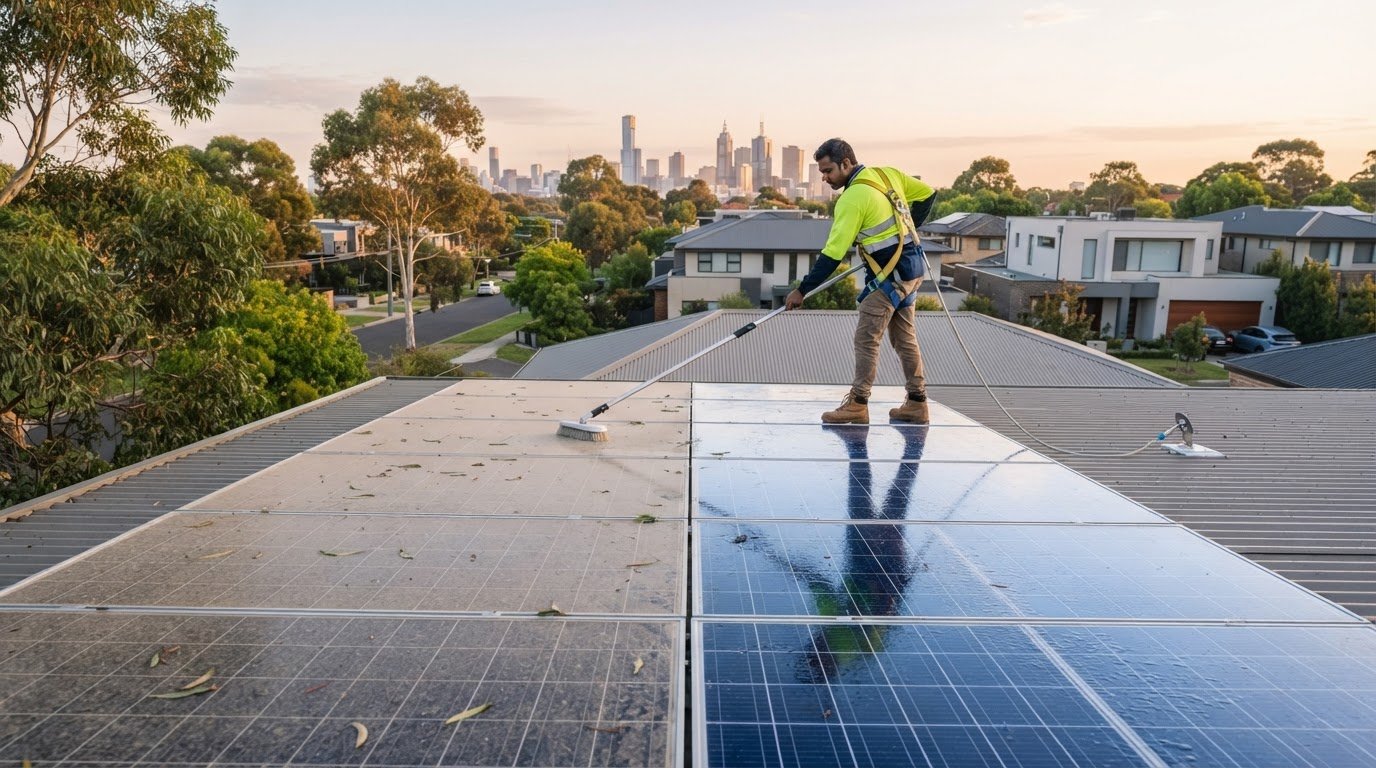
Cleaning solar panels doesn’t automatically mean more electricity. If you’re wondering how much does solar panel cleaning increase output, the honest answer is that it depends on whether dirt and debris are limiting your system’s generation.
A dip in your monitoring app can make a clean seem like the obvious fix, but cloudy weather, seasonal changes, shading or a system fault can also affect output. A rise after cleaning isn’t guaranteed. Comparing similar periods in your monitoring data is a more reliable way to judge whether cleaning made a difference.
This guide explains when soiling is more likely to reduce solar output, how to estimate a change using your own records, and what to check before arranging a clean. It also covers why roof access, panel care and personal safety matter if you’re considering DIY cleaning. If access or the roof pitch makes DIY work unsuitable, a professional service may be the safer next step.
Key Takeaways
- There’s no single answer to how much does solar panel cleaning increase output. The change depends on existing soiling, system condition and weather.
- Separate dirt-related losses from changes caused by cloud, shading or a possible system fault before deciding to clean.
- Use inverter or monitoring data to record a baseline, then compare generation after cleaning under similar conditions.
- Weigh visible soiling and recent generation patterns against the effort and safety risks of accessing your roof.
- For a quote from Gutter Wiz in Melbourne, share your location, roof access details and any visible soiling. The team cleans arrays manually using appropriate safety rigging.
How much can solar panel cleaning increase output?
There’s no reliable percentage that applies to every solar system. Cleaning can help if grime is blocking sunlight, but the result depends on how much soiling is present, where it sits, the system’s condition and the weather during the comparison period. A heavily soiled array may show a noticeable improvement, while lightly soiled panels may show little measurable change.
Cleaning-related output recovery is the difference in electricity generated after cleaning that can reasonably be linked to removing surface soiling, rather than to changes in sunlight or system operation. That distinction matters: a higher reading after a clean isn’t proof that cleaning caused the increase unless conditions are comparable.
Why solar panel cleaning results vary from home to home
Photovoltaic panels convert available sunlight into electrical energy. Dust, pollen, leaves and bird droppings can obstruct light reaching the cells. The effect depends on both the amount of grime and where it sits. A patch of bird droppings over part of a panel may affect the system differently from a light, even layer of dust across the array. The soiling losses on photovoltaic systems section explains how surface impurities can reduce light transmission and power output.
Soiling is only one possible cause of lower generation. Cloudy weather, seasonal changes in daylight, new shade from nearby trees or buildings, and equipment faults can also affect monitoring readings. Cleaning won’t resolve shading or a fault, so consider what else changed before attributing a dip to dirty panels.
What a realistic output claim should include
If someone quotes a percentage, check what supports it. A study should identify the systems and conditions it examined. A property-specific estimate should explain how generation was measured and compared. A result from one site or research setting isn’t automatically a forecast for a Melbourne home.
For a fair household comparison, use inverter or monitoring data from periods with similar weather and sunlight conditions. Record generation before cleaning, then compare it with readings after cleaning when conditions are reasonably alike. If the periods differ substantially, the result may not clearly show the cleaning effect.
More electricity generated doesn’t automatically mean the same increase in bill savings. The financial effect depends on how much energy the household uses while the system is producing power, as well as how much is exported. So, if you’re asking how much does solar panel cleaning increase output, treat any figure as specific to the evidence behind it, not as a universal benchmark or promise.
How dirt, weather, and solar system performance affect output
Solar panels convert available sunlight into electrical energy, so anything that reduces the light reaching their cells can affect generation. But a monitoring dip doesn’t automatically mean the panels need cleaning. Weather, shading and equipment performance can all influence the figures. Check the conditions around a before-and-after comparison before drawing conclusions.
Panel soiling, sunlight, temperature, shading and system performance all influence solar generation, so consider these factors together when assessing a change after cleaning.
Which types of soiling can affect solar generation?
Dust and pollen can settle as a film across the glass, while leaves and bird droppings may cover smaller, concentrated areas. A broad, light layer and a small but thick deposit don’t affect an array in exactly the same way. Location matters too: soiling on one section may affect that part of the array rather than every panel equally.
For more detail on this issue, read about how bird droppings affect solar panel efficiency. A visual check can help identify obvious grime, but it won’t explain every change in generation.
Why Melbourne weather makes comparisons harder
Melbourne’s changing conditions can make two readings difficult to compare. Cloud cover affects the sunlight available to panels. Daylight hours and the sun’s position change with the season, while panel temperature can also influence performance. A sunny day after cleaning may produce more electricity than a cloudy day before it, even if cleaning made little difference.
Rain can wash away some loose dust, but it doesn’t prove the panels are clean. Stubborn residue or debris may remain. Before comparing monitoring records, check local weather and look for periods with similar daylight and sunlight. A general understanding of solar generation can help frame what your system produces, but your own conditions matter when judging cleaning results.
Also consider less visible causes. New shade from a growing tree or a nearby structure can reduce sunlight reaching panels. An inverter issue or another system fault may affect how generated power is converted or recorded. Cleaning won’t fix these problems. If visible soiling is present but roof access feels unsafe, consider professional solar panel cleaning in Melbourne.
How to tell whether cleaning improved your solar output
Your inverter or solar monitoring platform can help you check whether generation changed after a clean. A useful comparison needs more than one reading: output varies with sunlight and weather, so one sunny day afterwards isn’t proof that cleaning made a difference.
Use this sequence to get a more meaningful estimate:
- Record a baseline: note generation over several days before cleaning, using the same measurement period each day.
- Clean safely: don’t climb onto a roof or use a method that could damage panels if you’re not confident. Arrange professional cleaning if roof access, pitch or your experience makes the work unsafe.
- Allow for comparable conditions: after cleaning, gather readings over a similar number of days and check for major differences in cloud cover, daylight and other local weather.
- Review the data: compare totals from equivalent periods, and note any gaps or unusual readings in the monitoring record.
A simple before-and-after comparison using monitoring data
Use the same data source and time window before and after the clean, such as daily generation totals from your inverter platform. Compare several days rather than choosing the best result from each period. If one set of days was much cloudier, or the monitoring data is incomplete, treat the result as an estimate rather than a precise measure of cleaning’s effect.
To calculate the percentage change, subtract the baseline output from the output after cleaning, divide the difference by the baseline output, then multiply by 100. For example, if the comparable baseline is 20 kilowatt-hours and the later reading is 22, the calculation is (22 minus 20) divided by 20, then multiplied by 100, or a 10% increase. That figure describes the readings you compared. It doesn’t prove cleaning alone caused the difference if conditions weren’t alike.
When an apparent output drop may be a system issue
If generation stays below the system’s usual pattern, check the monitoring platform for alerts and look for a persistent decline rather than relying on one low reading. Consider whether weather or new shading could explain the change, but don’t try to diagnose electrical or inverter faults yourself. If an alert appears or the drop remains unexplained, contact your solar installer or a qualified technician to investigate.
This evidence-based check is the practical way to assess how much does solar panel cleaning increase output for your own system. It can indicate whether generation changed while keeping the limits of the comparison clear.

Is solar panel cleaning worth it with uncertain gains?
Uncertain output gains don’t mean cleaning is never worthwhile. They mean the decision should be based on what you can observe, not on an assumed payback. Consider whether grime is visible, whether generation has changed over time, and whether cleaning can be done safely. If the panels look clear and your system is following its usual pattern, there may be little reason to arrange a clean solely in the hope of higher output.
Signs that a closer inspection may be sensible
Visible bird droppings, accumulated leaves or debris, or a long dry spell may be good reasons to inspect your array. These are prompts to check, not proof that soiling is reducing generation. Review your monitoring data and consider recent weather and shading before deciding dirt is the cause. There’s no single cleaning schedule that suits every property, so base the timing on the array’s condition and your own evidence.
Cleaning also has clear limits. It won’t remove shade from a tree or nearby building, repair damaged panels, or resolve an inverter or other system fault. If generation remains unusually low after you’ve considered soiling and weather, seek advice from your installer or a qualified technician rather than relying on cleaning to solve the problem.
When professional cleaning may be the practical option
Roof height, a steep pitch, difficult access and your confidence working at height all matter. A possible output gain isn’t worth an unsafe climb. If reaching the panels feels risky, leave the work to a professional. For more guidance on the trade-offs, read about DIY versus professional solar panel cleaning.
Gutter Wiz provides solar panel cleaning in Melbourne, with arrays cleaned manually using appropriate safety rigging. The technicians are fully insured and height-safety certified. If you’re weighing up a clean, compare your monitoring records and visible soiling first. No particular increase in output is guaranteed. That evidence can help you decide whether professional cleaning is a sensible next step for your property.
If access or roof pitch makes cleaning difficult, request a solar panel cleaning quote from Gutter Wiz and share your location, access details and what you can see on the panels.
How Gutter Wiz can help with solar panel cleaning in Melbourne
Once you’ve checked for visible soiling and reviewed your generation data, decide whether professional cleaning suits your property. Gutter Wiz provides solar panel cleaning in Melbourne, including for property owners who don’t feel comfortable accessing their roof or working around a steep pitch.
What to expect when arranging a solar panel cleaning quote
Share a few practical details so the team can understand the job:
- Your location: include your Melbourne suburb or property location.
- Roof access: describe the roof height, pitch and any access challenges you’re aware of.
- Visible soiling: mention dust, leaves, bird droppings or other debris you can see from a safe vantage point.
- Your reason for enquiring: explain whether you’ve noticed a change in generation or are arranging a clean because of visible grime.
These details help the team assess the work required for your property. A quote for cleaning isn’t an electrical inspection or a diagnosis of low generation. If you suspect damaged panels, an inverter issue or another system fault, contact your installer or a qualified technician.
A practical next step for Melbourne property owners
Where your monitoring platform provides generation data, record the current readings before arranging a clean. This gives you a baseline for a later comparison, although weather and other conditions can affect the result. You can also ask about the proposed cleaning approach and the safety measures relevant to access at your property.
Gutter Wiz’s technicians clean solar arrays manually using appropriate safety rigging. The team has over 10 years of exterior-cleaning experience, and its technicians are fully insured, police-checked and height-safety certified. This can offer reassurance where roof access or personal confidence makes DIY cleaning unsuitable. Cleaning may help remove surface soiling, but no particular output increase is promised.
If you’re still weighing up how much does solar panel cleaning increase output, your own monitoring records can help set a realistic expectation. A clean may remove an obstruction, but the result depends on your system and conditions. A quote is not a guarantee of higher generation or energy savings.
For a property-specific assessment, request a free Gutter Wiz quote online or by phone. Share your location, access details and what you can see on the panels, then decide whether the proposed cleaning work is right for your home.
Make your next step evidence-based
So, how much does solar panel cleaning increase output? There’s no universal figure. Any change depends on whether soiling is restricting sunlight, the condition of your system and the weather during your comparison. Use monitoring data from similar periods to assess whether generation changed, and remember that shading or a system fault may need a different response.
If panels are visibly dirty and roof access feels unsafe, professional cleaning can be a practical option. Gutter Wiz has over 10 years of experience serving Melbourne and the Mornington Peninsula. Its technicians are fully insured, police-checked and height-safety certified, and use appropriate safety rigging. Cleaning can remove soiling, but no particular output increase is guaranteed.
For a property-specific quote, share your location, roof access details and any visible grime. Request a free solar panel cleaning quote from Gutter Wiz, then choose the next step with a clearer picture of your system and property.
Frequently Asked Questions
How much more electricity will solar panels produce after cleaning?
There’s no reliable single figure for how much does solar panel cleaning increase output across all systems. The change depends on how much grime is present, where it sits, your system’s condition and the sunlight available before and after cleaning. Light soiling may make little measurable difference, while more substantial deposits may have a greater effect. Compare monitoring data from similar periods rather than treating one higher reading as proof.
Can dirty solar panels reduce electricity output?
Yes. Dust, pollen, leaves and bird droppings can block some sunlight from reaching the photovoltaic cells, which may reduce generation. The effect depends on the amount and location of the soiling, as well as the array and surrounding conditions. A visible deposit is a reason to check the panels, but it doesn’t prove dirt is behind a generation drop. Weather, shading and equipment issues can also affect output.
Does rain clean solar panels properly?
Rain can wash away some loose dust, but it doesn’t guarantee panels are clean. Stubborn residue, bird droppings and accumulated debris may remain after a shower, particularly if they’ve dried onto the surface. Check what you can see safely from the ground, and use monitoring data to understand generation trends. If you’re unsure whether the array needs attention, consider its visible condition rather than assuming rainfall has removed all soiling.
How do I calculate the output increase after solar panel cleaning?
Use generation readings from comparable periods before and after cleaning. Subtract the baseline output from the later output, divide that difference by the baseline, then multiply by 100 to get the percentage change. Use the same measurement period and review several days where possible. If the weather, daylight or data quality differs between periods, describe the result as an estimate, not a precise measure of cleaning’s effect.
How often should solar panels be cleaned in Melbourne?
There isn’t one cleaning frequency that suits every Melbourne property. The need depends on visible soiling, nearby trees, local dust and pollen, roof angle and how rain affects your array. Check the panels from a safe position and review generation patterns before arranging a clean. If you’re uncertain, follow the panel manufacturer’s care guidance or ask a suitable professional to help assess whether cleaning is warranted.
Is it safe to clean solar panels yourself?
It may be unsafe if cleaning requires climbing onto a roof, particularly where the roof is high, steep or difficult to access. Don’t take a risk for a possible output improvement. If you’re considering DIY, follow the panel manufacturer’s cleaning instructions and avoid methods or materials that could damage the surface. Professional cleaning is an option if you’re not confident working at height or reaching the array safely.
Will cleaning fix low solar panel output?
Only if surface soiling is contributing to the lower generation. Cleaning won’t fix shade from trees or buildings, damaged panels, inverter problems or other system faults. Check monitoring alerts and compare recent generation with your system’s usual pattern, allowing for weather and seasonal changes. If output remains unusually low or an alert appears, contact your solar installer or a qualified technician to investigate rather than relying on cleaning alone.