
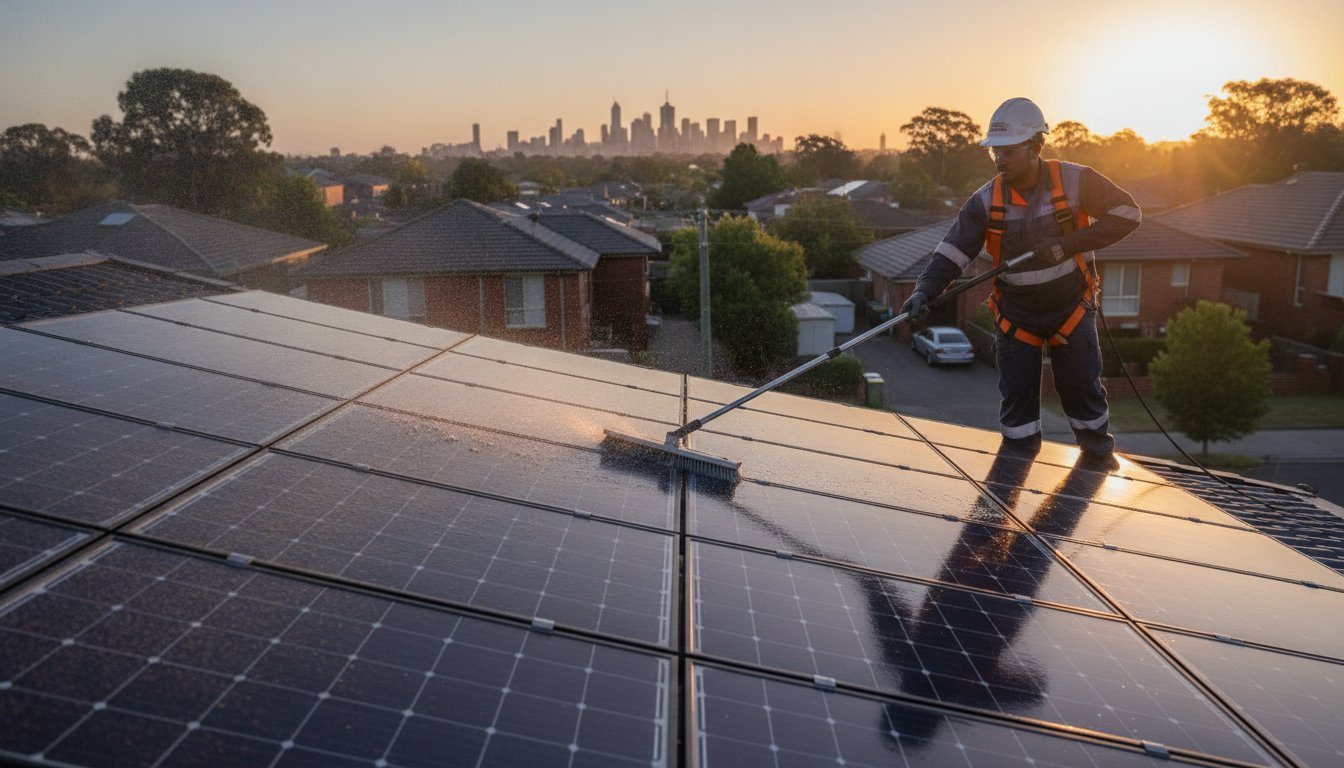
While a heavy Melbourne downpour might seem like a free car wash for your roof, relying on rain to maintain your solar investment is often a costly mistake. For many local homeowners, the choice between diy vs professional solar panel cleaning Melbourne comes down to a simple question of value. You’ve likely noticed your energy bills creeping up despite the clear skies. Perhaps you’re staring at the ladder with a growing sense of dread. These are valid concerns for any property owner.
It’s natural to want to handle maintenance yourself to save on costs. However, baked-on salt spray and city grime require more than a garden hose to shift effectively. In this 2026 guide, you’ll discover if the risks of DIY cleaning outweigh the rewards. We’ll show you how to restore your array to peak performance while keeping your manufacturer’s warranty valid. We also clarify the latest Solar Victoria servicing standards to ensure your system remains safe and compliant. Your home maintenance should be simple and secure.
Key Takeaways
- Understand why Melbourne’s rainfall often leaves muddy residue instead of cleaning your panels and how local pollutants like industrial soot impact efficiency.
- Learn the safety boundaries of diy vs professional solar panel cleaning Melbourne, including when it’s safe to handle yourself and when the risks to your roof and health are too high.
- Discover the technical difference between tap water scaling and professional deionised water systems that ensure a streak-free, high-performance finish.
- Identify the hidden warranty clauses and physical risks, such as micro-cracks, that can permanently damage your solar investment during improper cleaning.
- Find out the recommended cleaning intervals for Melbourne and the Mornington Peninsula to maximise your return on investment and energy output.
Why Melbourne Solar Panels Need More Than Just Rain
Many Melbourne homeowners believe that our frequent rain showers act as a natural cleaning service for their solar arrays. This is a persistent myth. While a heavy downpour might rinse away loose dust, it rarely removes the stubborn film that accumulates over months. In fact, light rain often mixes with existing surface dust to create muddy streaks that settle along the bottom edge of the panels. This residue creates a “shading” effect that limits energy production. When debating diy vs professional solar panel cleaning Melbourne, you must consider that our local atmosphere carries specific pollutants that water alone cannot shift.
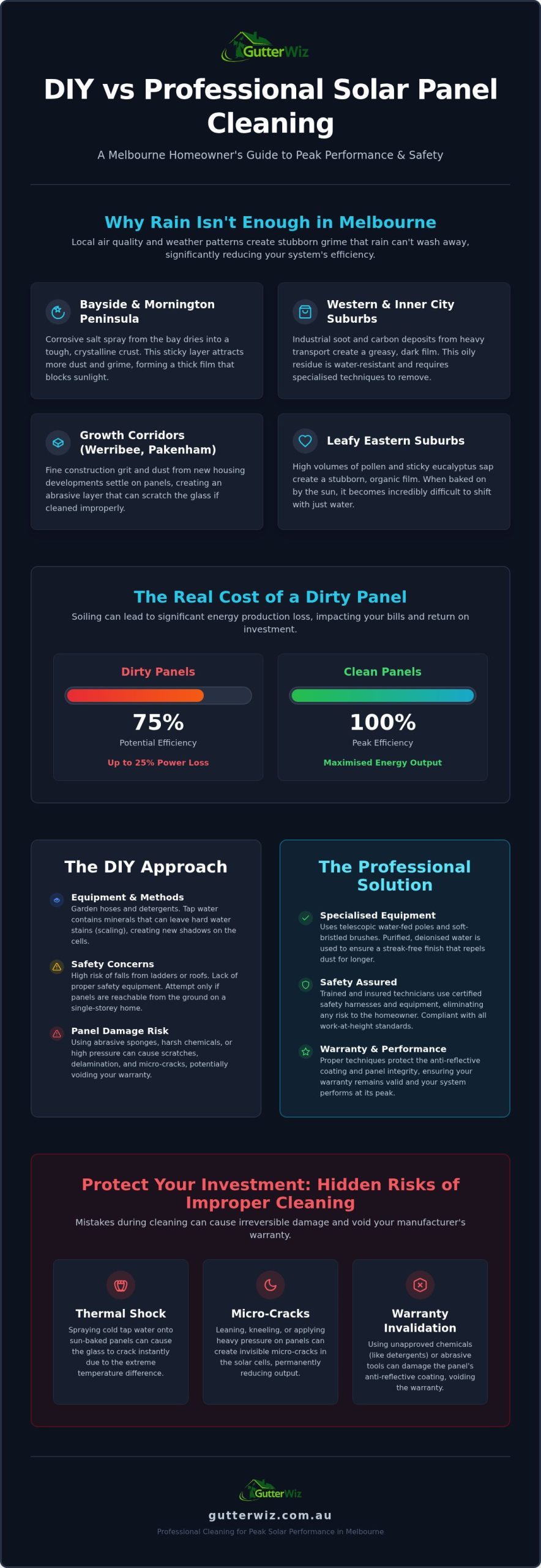
The type of grime on your roof depends heavily on your postcode. In the Western suburbs, industrial soot and carbon deposits from heavy transport corridors create a greasy, dark film. In the leafy Eastern suburbs, the primary challenge is organic: sticky eucalyptus sap and high volumes of garden pollen. Bayside residents face an even tougher task. Salt spray from the bay dries into a translucent, crystalline crust. This salt layer is particularly problematic because it’s sticky, attracting more dust and bird droppings, which can quickly lead to an efficiency loss of up to 25%.
The Science of Photovoltaic Obstruction
Solar panels require a clear path for photons to reach the silicon cells. Microscopic particles of carbon, silica, and organic matter act as a physical barrier. This accumulation leads to general soiling loss on panels, a phenomenon that compounds the longer the panels are left unwashed. Bird droppings are especially damaging. Because photovoltaic cells are typically wired in series, a single dropping can shade one cell and cause the entire string to underperform. Melbourne’s high UV index during the summer months effectively “bakes” these contaminants onto the glass, making them incredibly difficult to remove with standard garden hoses.
Melbourne Micro-Climates and Your Roof
Local environmental factors dictate how often you need to clean your system. On the Mornington Peninsula, coastal winds carry salt and abrasive sand that can scour the glass if not cleaned with the right technique. Inner City properties deal with a constant rain of traffic film from major arterial roads like the Monash or the Eastern Freeway. Meanwhile, residents in developing growth corridors near Werribee or Pakenham often see their panels covered in fine construction grit from nearby housing developments. These diverse conditions mean that the choice of diy vs professional solar panel cleaning Melbourne isn’t just about convenience; it’s about using the correct methods to tackle specific local residues without damaging the equipment.
The DIY Approach: What Homeowners Can Safely Manage
Taking a hands-on approach to home maintenance is common for many residents. If you live in a single-storey home with a low-pitched roof, you might be able to handle basic maintenance from the ground. Safety is the absolute priority here. You should only attempt a DIY clean if you can reach the panels without climbing onto the roof itself. For those seeking guidance on DIY cleaning, the golden rule is to keep your feet on solid ground. When comparing diy vs professional solar panel cleaning Melbourne, the physical risk is often the deciding factor for many property owners.
Your DIY toolkit should be specialised but simple. Avoid standard household cleaners, abrasive sponges, or any metal scrapers. These will permanently damage the glass. Instead, use a soft-bristled brush attached to a high-quality telescopic pole. This setup allows you to reach the centre of the array without leaning your weight against the panels. You must skip the dish soap or detergents. These products leave a sticky residue that actually attracts more dust and pollen. If your roof is high, steep, or multi-level, it’s safer to rely on a professional solar panel cleaning service rather than risking a fall from a ladder.
Step-by-Step DIY Cleaning Process
Timing is everything in the volatile Melbourne climate. Never clean your panels on a hot afternoon. The temperature difference between cold water and sun-baked glass can cause the panels to crack instantly. Start early in the morning while the panels are still cool and the morning dew has already softened the grime. Use a low-pressure garden hose to rinse away loose grit first. This step is vital to prevent scratching the anti-reflective coating when you begin scrubbing. Use long, gentle strokes with your brush and avoid applying heavy downward pressure.
The Limits of Residential Equipment
Standard garden hoses often lack the reach and volume needed to shift heavy soiling. If you live near an industrial zone or the coast, you’ll likely find that simple tap water doesn’t cut through the greasy film. Another hidden issue is Melbourne’s tap water itself. It contains minerals that can leave “hard water” spots as the panels dry. These spots can eventually lead to scaling, which is difficult to remove without professional chemicals. If you notice white streaks or cloudy patches after your panels dry, your equipment has reached its limit. You should never walk on the panels to reach stubborn spots. This causes micro-cracks that are invisible to the eye but eventually lead to cell failure.
Professional Solar Panel Cleaning vs DIY: The Technical Gap
While many homeowners focus on the convenience of outsourcing, the real differentiator in diy vs professional solar panel cleaning Melbourne is the equipment used. Much like how a professional Carpet Cleaner In Manchester utilises specialised extraction technology for superior results, professional solar systems go far beyond a standard garden hose. This technical gap between a home-managed clean and a professional service directly impacts the longevity and efficiency of your solar investment.
One of the biggest technical gaps involves the water itself. Melbourne tap water contains dissolved minerals like calcium and magnesium. When this water evaporates on a solar panel, it leaves behind white spots known as limescale. Over time, this scaling becomes a permanent barrier that reduces light absorption. Professionals use deionisation (DI) systems that strip these minerals away. This “pure water” acts like a magnet for dirt, lifting grime without chemicals and leaving a streak-free finish that stays clean longer because there’s no sticky residue left behind.
Advanced Cleaning Technologies
Specialised solar brushes also play a vital role. Unlike a standard broom, these brushes feature soft nylon heads designed specifically for photovoltaic glass. They provide consistent, gentle agitation that outperforms manual scrubbing. When combined with carbon-fibre water-fed poles, technicians can clean large or difficult-to-reach arrays safely. Professional-grade equipment, such as that sourced from Tensens Cleaning Supplies, ensures that the anti-reflective coating on your panels remains intact while removing even the most stubborn industrial soot or coastal salt crust.
Safety, Insurance, and Liability
Working on a Melbourne roof carries significant physical and legal risks. Professional technicians must maintain strict WorkSafe Victoria compliance for all height-based tasks. This isn’t just about personal safety; it’s about protecting the homeowner. Most standard home insurance policies have exclusions for injuries sustained during high-risk DIY maintenance. If a homeowner falls while cleaning their own panels, they may face massive medical costs and zero coverage. The physical danger is simply not worth the perceived savings.
Hiring a height-safety certified specialist transfers this liability. It ensures the work is performed by a fully insured professional who understands Melbourne’s varied roof pitches and weather conditions. At Gutter Wiz, we reinforce this trust by providing photographic evidence of the results. This visual verification allows property owners to see the thoroughness of the clean without ever needing to step onto a ladder. It provides a “safe pair of hands” and tangible evidence of a job well done, ensuring your system operates at its absolute peak.
Navigating Warranties and Hidden Risks
Many homeowners choose the DIY route to save money, but the hidden costs often outweigh the perceived savings. When you factor in the purchase of specialised telescopic poles, soft brushes, and safety equipment, the initial outlay is significant. More importantly, the risk of voiding your manufacturer warranty is a high price to pay. Most Tier 1 panel manufacturers include specific clauses that mandate professional maintenance or prohibit the use of abrasive tools and chemicals. If you cannot produce documented proof of professional care, a future warranty claim for cell degradation or water ingress may be rejected. This financial risk is a primary factor when weighing up diy vs professional solar panel cleaning Melbourne.
Micro-cracks are another invisible risk that can cripple your system’s output. These tiny fractures occur when a homeowner leans their weight on a panel or walks across the array to reach a stubborn spot. While the glass may not shatter, the internal silicon cells are compromised. These cracks eventually lead to “snail trails” and significant power loss that a standard monitor might not immediately detect. Professional technicians use water-fed poles that allow them to clean the entire array without ever placing pressure on the panels, preserving the structural integrity of every cell.
Protecting Your Solar Investment
Melbourne’s extreme summer temperatures introduce the risk of thermal shock. Applying cold tap water to a sun-baked panel can cause the tempered glass to shatter instantly. A professional service manages this risk through proper timing and temperature control. Beyond the cleaning itself, keeping a log of professional receipts is vital. This archival record serves as evidence-based proof that your system has been maintained to industry standards. Without this documentation, you’re left with no recourse if the anti-reflective coating begins to peel or the seals fail prematurely. Using household detergents is equally risky, as the chemicals can eat away at the silicone seals that keep moisture out of the electrical components.
Fire Safety and System Health
A professional clean doubles as a vital system health check. While on the roof, a trained eye can spot frayed wiring, loose mounting brackets, or cracked conduit that a homeowner would likely overlook. Debris buildup, particularly dry leaves and bird nests under the panels, creates a significant fire risk during a dry Melbourne summer. Technicians also look for “hot spots,” which are areas of intense heat caused by failing cells or electrical faults. Identifying these issues early prevents total system failure and ensures your home remains safe. To secure your system’s longevity, you can book a professional solar panel clean to ensure every detail is handled with precision and care.
Conclusion: Securing Peak Performance for Your Melbourne Home
Securing the maximum return on your solar investment requires more than just installation. It demands a disciplined approach to maintenance. The debate between diy vs professional solar panel cleaning Melbourne often focuses on the immediate cost, but the true return on investment comes from restored efficiency and system longevity. A “set and forget” mentality is expensive. It costs you money every billing cycle as your output drops and your reliance on the grid increases. By the time you notice a significant dip in performance, the grime is often baked on and much harder to remove.
For residents across Melbourne and the Mornington Peninsula, we recommend a professional clean at least once a year. This frequency helps manage the specific local challenges of industrial soot, garden pollen, and coastal salt spray. It’s also important to distinguish between a clean and a full electrical service. While Energy Safe Victoria and Solar Victoria recommend a comprehensive system service by a licensed electrician every two years, an annual professional clean ensures the glass remains clear and the cells operate at peak capacity between those technical inspections. Combining your solar care with professional gutter cleaning is a pragmatic way to manage total roof health in a single, unobtrusive visit.
Your Solar Maintenance Schedule
The best time to schedule your professional clean is during spring or autumn. A spring clean prepares your system for the high-production summer months. An autumn clean removes the dust and pollen accumulated during the dry season, ensuring you capture as much light as possible during the shorter winter days. You should monitor your inverter data regularly. If you see a consistent 10% to 15% drop in output compared to the same month last year, it is a clear sign that grime is obstructing your cells.
- Check your monitoring app monthly for unexplained production drops.
- Look for visible debris or bird droppings from the ground.
- Bundle your services to ensure gutters, panels, and roof surfaces are maintained simultaneously.
- Keep a log of all professional maintenance to satisfy manufacturer warranty requirements.
Ready to Boost Your Energy ROI?
Gutter Wiz provides a methodical and thorough cleaning service that prioritises the safety of your property and the performance of your solar array. With over 10 years of local experience, our height-safety certified technicians use specialised deionised water systems to provide a streak-free finish without the risks of DIY methods. We take pride in our transparency, providing before-and-after photographic evidence so you can see the results for yourself. This evidence-based approach ensures you have a “safe pair of hands” looking after your home.
Don’t let Melbourne’s micro-climates sap your solar savings. We offer a straightforward, no-obligation quoting process for homeowners across the region. Contact us today to arrange a consultation and ensure your system is ready to perform. Get a Free Solar Cleaning Quote from Gutter Wiz and take the first step toward securing your energy future.
Secure Your Solar Investment for the Long Term
Maximising your energy output in Melbourne requires a shift from “set and forget” to proactive maintenance. We’ve explored the critical factors in diy vs professional solar panel cleaning Melbourne, highlighting that while ground-based rinsing has its place, it cannot match the restorative power of deionised water. Professional care doesn’t just clear the glass; it protects your manufacturer warranty and prevents the invisible damage caused by improper handling. With 10+ years of experience serving Melbourne and the Mornington Peninsula, Gutter Wiz acts as a safe pair of hands for your property maintenance needs.
Our technicians are fully insured and height-safety certified, ensuring every task is completed with methodical precision. We provide before and after photos so you can verify the efficiency gains for yourself. This transparent approach removes the guesswork and secures your property’s health without the risks of DIY attempts. Don’t let seasonal grime compromise your energy ROI any longer.
Request a Free Solar Panel Cleaning Quote Today and enjoy the peace of mind that comes with expert service. Your solar array is a significant investment; we’re here to help you keep it performing at its absolute peak.
Frequently Asked Questions
Can I use a pressure washer to clean my solar panels?
No, you should never use a pressure washer on solar panels. The high-pressure stream can cause microscopic fractures in the tempered glass or force water into the electrical junction boxes. This damage often voids warranties and leads to system failure. Instead, use a low-pressure garden hose or a specialised water-fed pole system to safely remove debris without compromising the panel’s structural integrity.
How often should solar panels be cleaned in Melbourne?
We recommend a professional clean at least once every 12 months for most Melbourne homes. Properties near the coast or industrial areas benefit from a six-monthly schedule to manage salt and soot buildup. Regular maintenance ensures your array operates at its peak efficiency. It’s also important to remember that Energy Safe Victoria recommends a full electrical service by a licensed electrician every two years.
Does rain actually clean my solar panels?
Rain is rarely enough to keep your panels at peak performance. While it might rinse away loose dust, it cannot shift baked-on bird droppings, sticky tree sap, or industrial film. In many cases, light rain mixes with existing dust to create muddy streaks that actually block more sunlight. Manual cleaning is the only way to ensure the glass is clear enough for maximum energy absorption.
Will cleaning my solar panels void my warranty?
Cleaning itself won’t void your warranty, but using improper methods certainly will. Many manufacturers’ terms prohibit the use of abrasive brushes, high-pressure water, or harsh chemicals. If you choose diy vs professional solar panel cleaning Melbourne, you must follow the manufacturer’s guidelines exactly. Hiring a professional provides a documented maintenance trail, which is vital if you ever need to make a future performance claim.
Is it worth paying for professional solar panel cleaning?
Yes, the return on investment usually outweighs the service cost through increased energy production. When weighing up diy vs professional solar panel cleaning Melbourne, remember that pros can restore up to 25% of lost efficiency by removing stubborn films. Beyond the financial gains, the professional choice eliminates the risk of roof falls and accidental damage to your equipment. It offers peace of mind through height-safety certified expertise.
What is the best time of day to clean solar panels?
Early morning is the ideal time for solar panel maintenance. Cleaning sun-baked glass with cold water on a hot Melbourne afternoon can cause thermal shock, leading to instant cracking. By starting early, the panels are cool and the morning dew has already softened the grime. This makes the cleaning process more effective and much safer for the tempered glass surfaces of your array.
Do I need to turn off my solar system before cleaning?
It is a standard safety precaution to shut down your solar system before any cleaning begins. Consult your manufacturer’s manual for the correct shutdown sequence, which typically involves turning off the AC isolator and then the DC isolator. This step reduces the risk of electrical faults if there is any undetected damage to the wiring or panel seals, ensuring a safe working environment for you or the technician.
What kind of water should be used for solar panel cleaning?
Deionised water is the gold standard for solar maintenance. Unlike Melbourne tap water, which contains minerals that leave white limescale spots, deionised water is “pure.” It acts as a magnet for dirt and dries without leaving any residue or streaks. This ensures the glass remains perfectly clear, allowing the maximum amount of sunlight to reach the photovoltaic cells for optimal energy generation.